
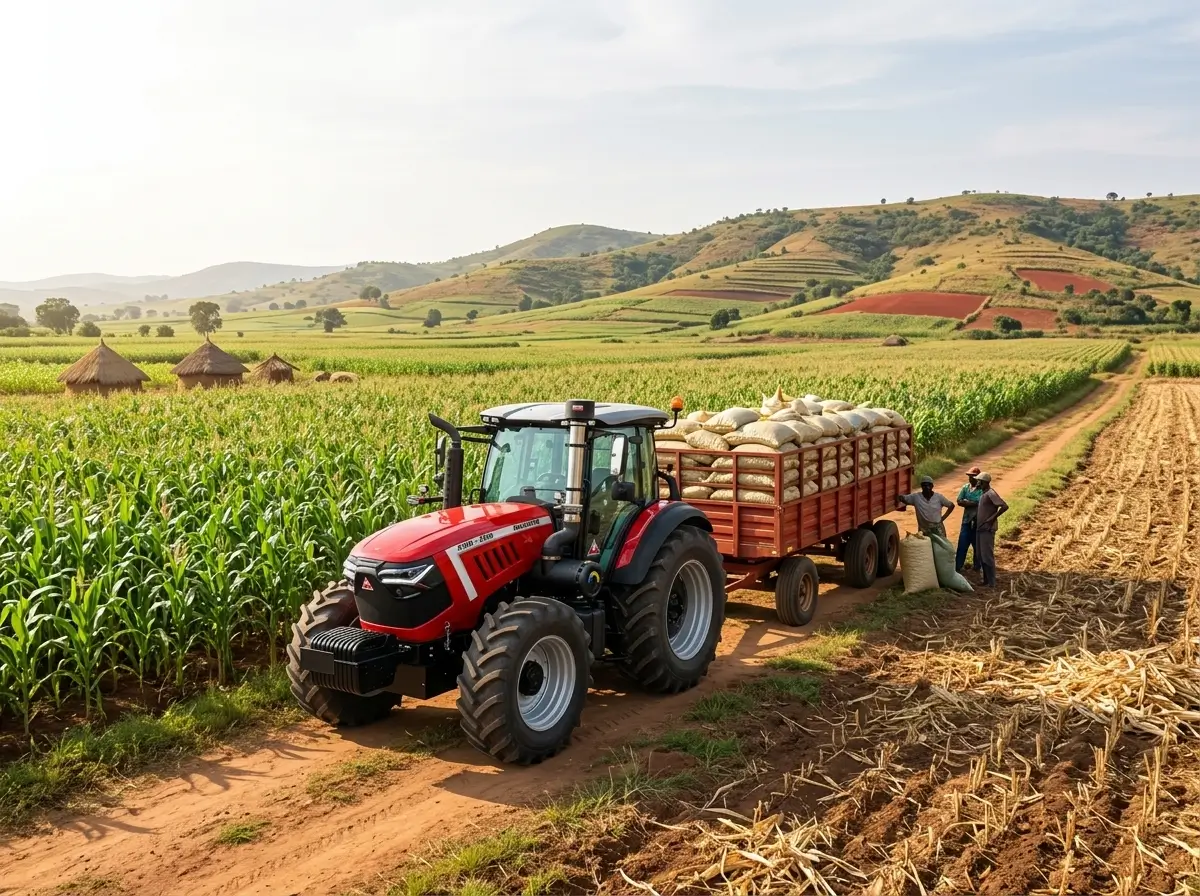
Tractor financing in Zambia typically involves bank agricultural loans, microfinance institutions, cooperative schemes, or supplier-backed payment plans that let farmers spread the cost of a tractor over several harvest seasons. For many smallholder and commercial farmers, financing bridges the gap between the high upfront cost of mechanization and the long-term productivity gains a tractor delivers.
Why Is Tractor Financing Important for Zambian Farmers?
Access to affordable credit remains one of the biggest obstacles to mechanization in Zambia.
High interest rates and strict collateral requirements have historically limited how many smallholder farmers can borrow, which slows the adoption of modern farm machinery and keeps yields lower than they could be.
Financing options that are tailored to the agricultural calendar—where repayments align with harvest income rather than fixed monthly schedules—make tractor ownership far more achievable for farmers working maize, soy, or mixed crop operations.
What Tractor Financing Options Are Available in Zambia?
Zambian farmers generally have four main routes to financing a tractor:
- Commercial bank loans – Several Zambian banks offer agricultural equipment loans, often requiring collateral and a business plan.
- Microfinance institutions – These provide smaller loans with more flexible terms, suited to smallholder and medium-scale farmers.
- Government and cooperative schemes – Periodic government-backed mechanization programs and farmer cooperatives sometimes offer subsidized credit or group purchasing power.
- Supplier payment plans – Dealers such as Tractors Zambia can advise on structured payment arrangements, helping farmers acquire machinery without needing the full purchase price upfront.
Each option carries different interest rates, repayment periods, and eligibility criteria, so comparing them against your farm’s cash flow is essential before committing.
How Can Farmers Qualify for Tractor Financing?
Lenders typically assess farm size, expected yield, existing debt, and available collateral before approving a loan. Preparing a clear budget that outlines how the tractor will increase output—supporting documents like land title deeds or cooperative membership can also strengthen an application. Farmers researching options for a Massey Ferguson or New Holland tractor often find it useful to get a firm price quote first, since lenders need an accurate figure to calculate loan amounts. See current tractor prices in Zambia for guidance.
What Are the Barriers to Accessing Tractor Credit in Zambia?
Restricted access to credit remains a persistent challenge for smallholder farmers in Zambia, largely due to high interest rates and limited formal banking relationships in rural areas. This has a direct impact on how many farmers can afford to mechanize, which in turn affects national agricultural output. Understanding these barriers—and exploring alternatives like supplier financing—can help farmers find a workable path to ownership despite a tough lending environment.
Frequently Asked Questions
How much deposit is usually required for tractor financing in Zambia?
Deposit requirements vary by lender but commonly range from 10% to 30% of the tractor’s price, depending on the farmer’s credit history and the financing institution.
Can used or reconditioned tractors be financed in Zambia?
Yes, many lenders and suppliers extend financing to used and reconditioned tractors, which often carry a lower purchase price and therefore a smaller loan requirement.
Who can farmers contact for help choosing a financing option?
Farmers can speak directly with a trusted dealer such as Tractors Zambia, who can advise on pricing, available models, and payment arrangements suited to individual farm budgets.
Tags: agriculture, farming, machinery, masseyferguson, newholland, tractors, zambia